Trade · restaurants & catering

Cold rooms for restaurants, caterers and institutional kitchens

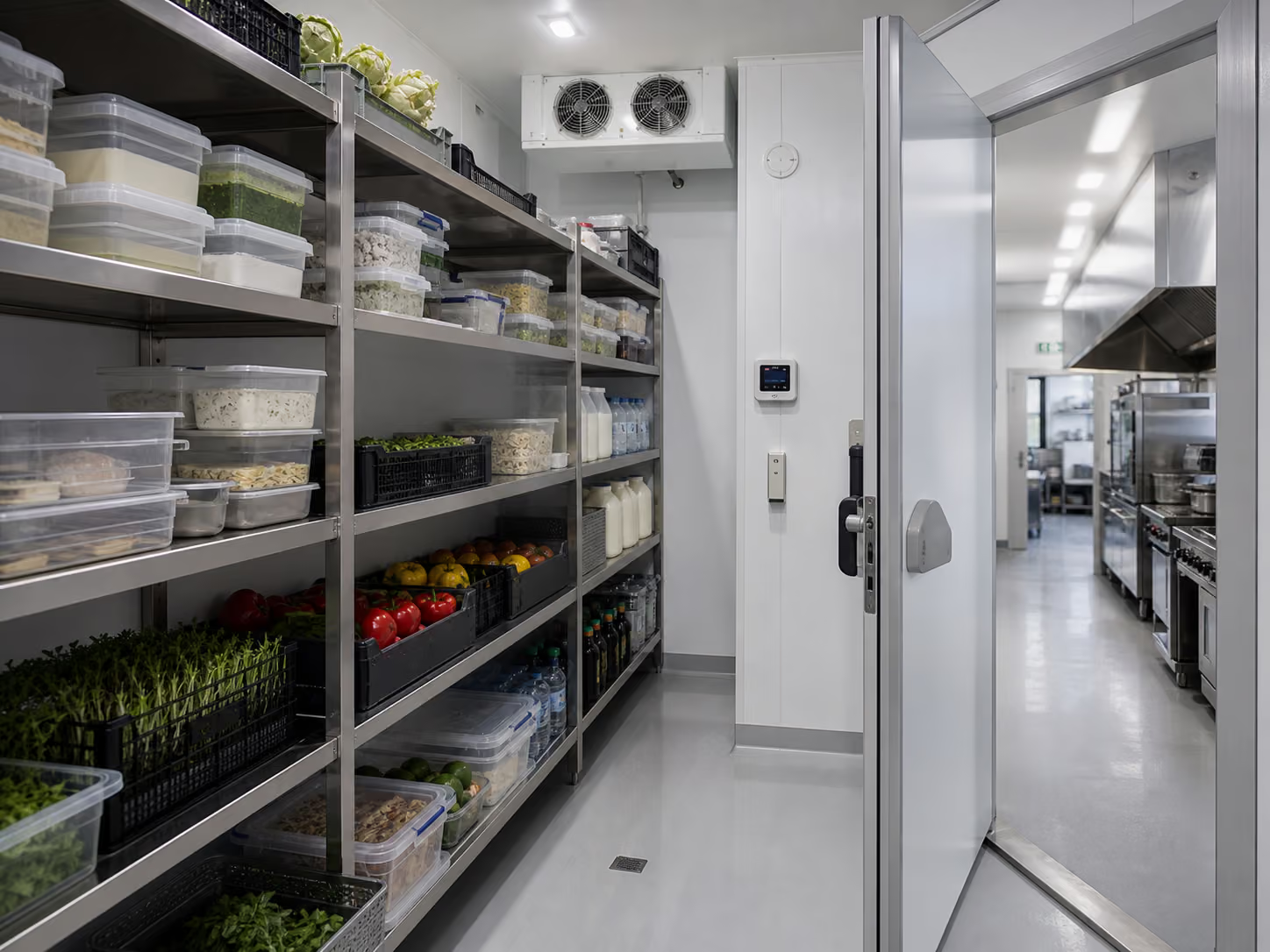
Restaurant under refurbishment, a fast opening, a seasonal catering contract, an institutional kitchen: the containerised cold room deploys where a built-in room would take months. Pre-charged R290, HACCP compliant, traceability ready.

Photo terrain · Trade · restaurants & catering

Catering is a fast-changing sector. Business takeovers, refurbishment, expansion, the tourist season — all moments where a built-in cold room is too slow. The containerised unit arrives in 8–12 weeks, works on the day of delivery, and stays mobile to follow your activity.

Regulations

HACCP and Regulation (EC) 852/2004 — food hygiene

Commercial catering is subject to the EU hygiene package. Cold-room obligations: controlled temperatures (≤ +4 °C for sensitive products, ≤ −18 °C for frozen goods), traceability through temperature recording (at least twice a day), washable materials, and a formalised cleaning plan. Our Dixell control keeps a temperature history accessible for HACCP.

Source: Regulation (EC) 852/2004 — HACCP plan

Key features

What your trade needs

Mixed positive + negative available

The average restaurant needs both: positive for fresh produce, negative for frozen. Our 20 m³ dual-zone room covers exactly that within the footprint of a single container.

Thermal lobby for service

For restaurants in open service with frequent access: a thermal lobby plus strip curtain that saves 15–25 % in consumption and stabilises temperature through the peaks.

Built-in HACCP support

Our quotation delivers a partial hygiene plan pre-filled for the cold-room side (probes, alarms, recording frequency) that slots into your existing HACCP file.

Sizing by restaurant size

Small restaurant, 30–50 covers per service: 10–15 m³ positive plus a built-in freezer top-up. Restaurant of 80–120 covers: 20 m³ dual-zone (15+5). Large-capacity restaurant of 150+ covers or wholesale caterer: 25–30 m³ dual-zone. Institutional kitchen (>500 meals a day): 40 m³ industrial with a refrigeration partner. Our quotation refines this around your menu (seasonal ingredients, supplier delivery frequency).

Bridging refurbishment works — the typical case

You take over a restaurant and gut and rebuild the kitchen. The containerised room sits in the yard or a temporary parking space, you operate from it through the 3–8 months of works, then you decide: keep it (mobile, resaleable), move it to another site, or sell it on. The net cost of the operation is often below renting a container from a short-term hire firm.

Questions fréquentes

Which probes do I need for HACCP?

Our standard Dixell XR60CX control includes two redundant NTC probes (set-point plus safety). For HACCP, add the USB logger option (around 280 € ex VAT) or the mobile/4G remote monitoring (around 650 € ex VAT) that exports readings as CSV/PDF. Compatible with the HACCP tools on the market.

Can the container stay in place after the works?

Yes, and it is common. Many restaurants start with a temporary container and end up keeping it permanently (saving on a built-in room while keeping mobility). Just check local planning rules with your municipality — most accept a cold-room container in a rear yard, and small equipment is often exempt from a building permit, but this varies by country.

How many covers does a 20 m³ support for high-volume catering?

For an event caterer storing 300–500 covers in preparation (cocktail, wedding): 20 m³ positive is enough if you work to day-before supplier deliveries. To store the equivalent of 1,000+ covers (prepared dishes, drinks, canapés), step up to 30 m³ or a dual-zone room.

Un projet précis ? Devis sous 48 h.

Indiquez votre usage, votre volume cible et votre adresse de livraison. Notre équipe technique répond avec une fiche dimensionnée et un prix HT clair, dans les 2 jours ouvrés.